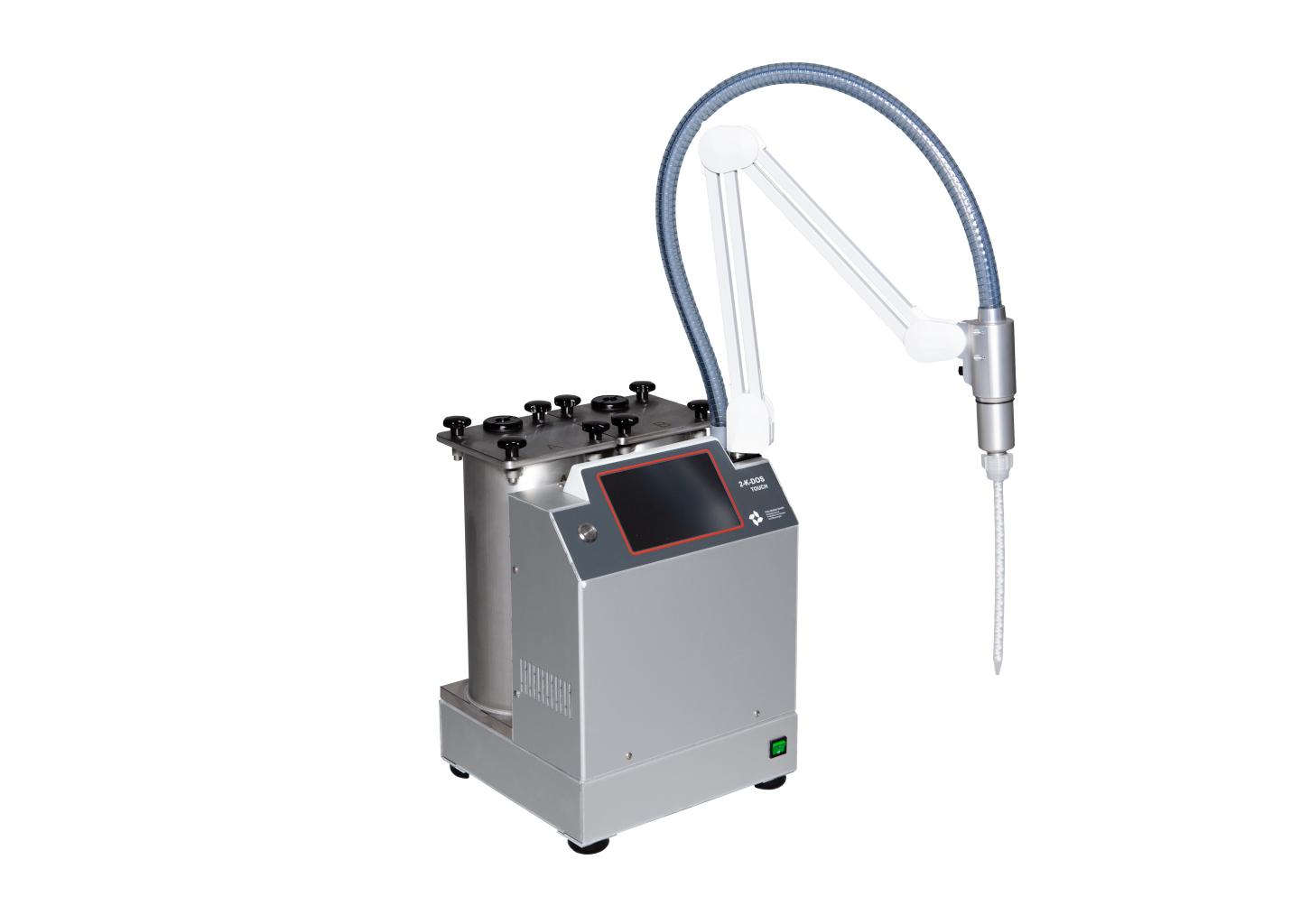
2-K-DOS Touch
The 2-K-DOS Touch mixing and dispensing unit provides fast and precise mixing and dosing of 2-component potting compounds based on polyurethane, epoxy, and silicone. Thanks to its modular design and a variety of interfaces, the system can be adapted to a wide range of applications. Operation is simple and menu-driven via an intuitive touch panel.
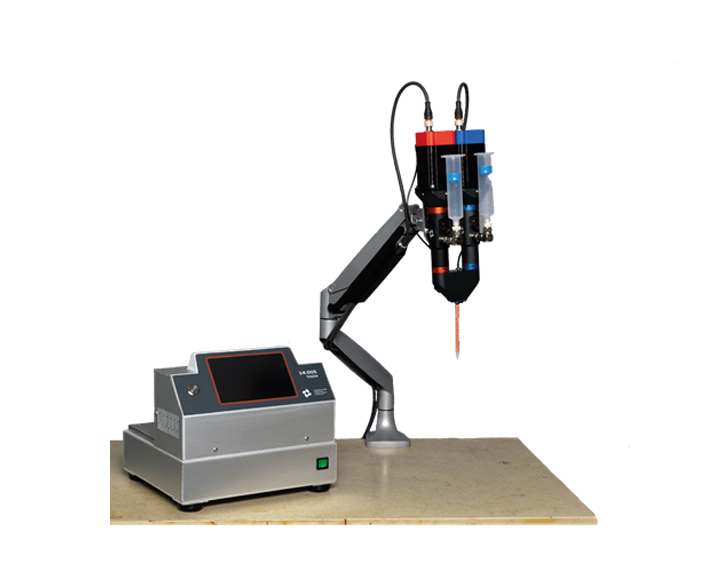
2K MICRO DOS
The mixing and dosing device 2-K-MICRO-DOS quickly and precisely mixes and doses 2-component casting compounds and adhesives based on polyurethane, epoxy and silicone in very small quantities, around 10 mg. With its modular design and a range of interfaces, the device can be adapted to a wide variety of applications. Operation is simple and menu-driven with a touch panel.
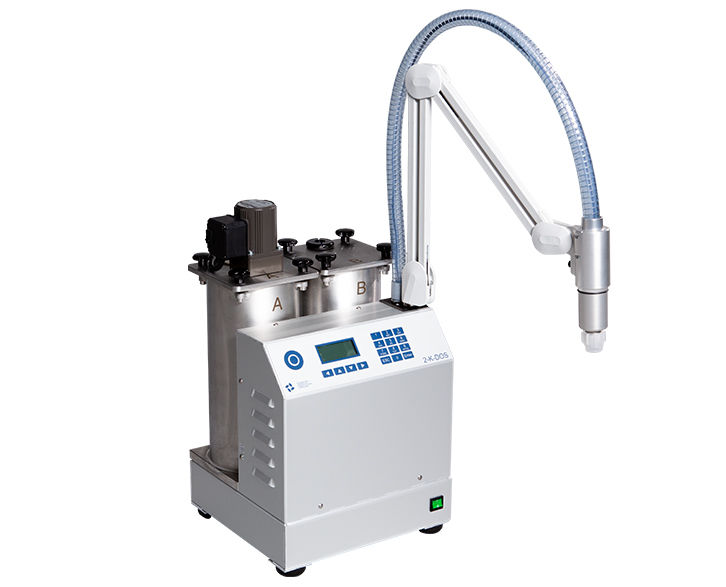
2-K-DOS
The 2-K-DOS mixing and dosing system mixes and doses 2-component casting compounds and adhesives based on polyurethane, epoxy and silicone quickly and precisely. With its modular design, the device can be adapted to a wide variety of applications.
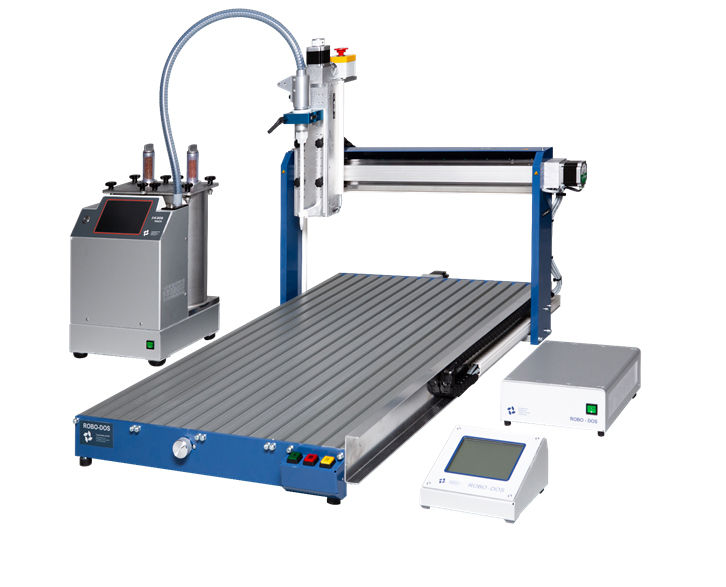
ROBO-DOS
The three-axis coordinate table ROBO-DOS, together with the mixing and dosing system 2-K-DOS T, results in a robot system for the fully automatic encapsulation of assemblies and parts such as electronic assemblies, sensors, sealing tracks and coatings. Parts can be cast at one point or with a track. They can be arranged several times on a pallet and then automatically poured one after the other by the device.
Note: The 2-K-DOS T dosing device is not included in the ROBO-DOS. It is shown in the illustration for demonstration only.
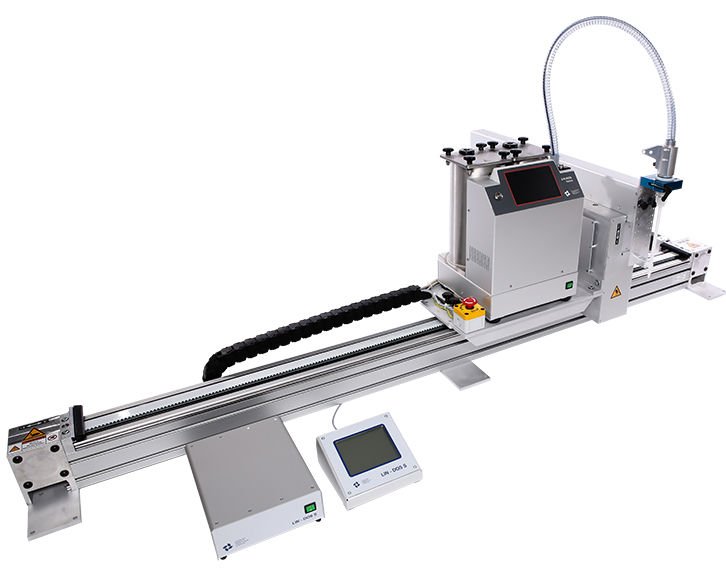
LIN-DOS SW
LIN-DOS SW is a three-axis linear unit for the automatic casting of rails and assemblies, in particular LED light strips together with the mixing and dosing devices 2-K-DOS T or 2-K-Micro-DOS.
Note: The 2-K-DOS T is not included in LIN-DOS. The 2-K-DOS T is included in the illustration above for demonstration purposes only.
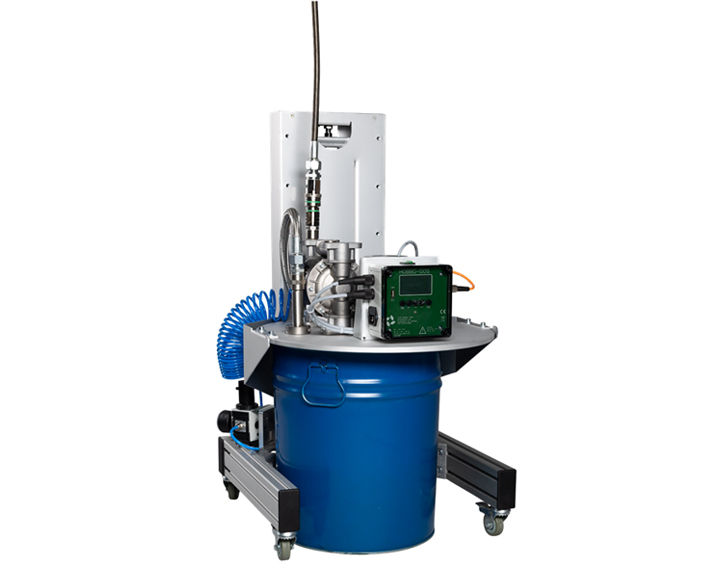
HOBBO DOS
The HOBBO-DOS is a device for directly loading components A and B from the two HOBBOK containers standing on the ground into the 2-K-DOS mixing and dispensing system. All HOBBO-DOS assemblies are built on a round plate, which can be raised and lowered pneumatically on a mobile frame.
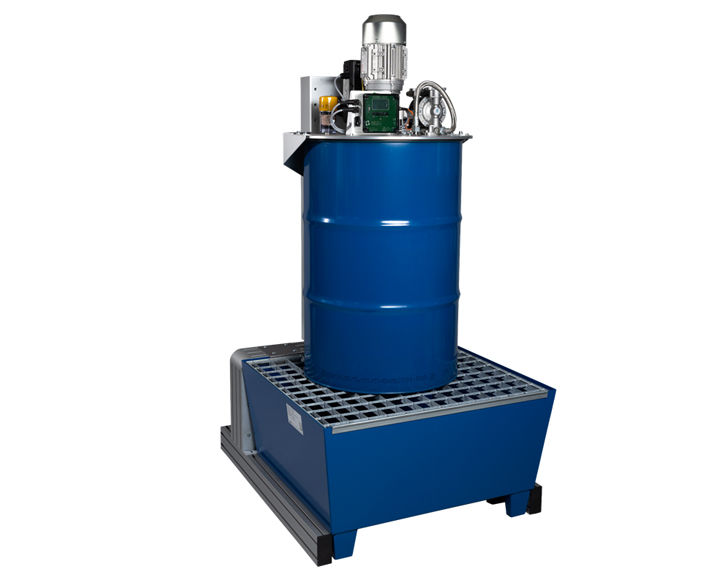
LOAD DOS
LOAD-DOS is a station for the automatic loading of 2-component casting compounds from 200 ltr. Barrels or similar large containers in the containers of the mixing and dosing devices, e.g. the 2-K-DOS.
FAQ: Essential Insights into 2K Dispensing Technology & Potting Processes
What is meant by 2-component potting?
2-component potting (often involving a resin and a hardener) is a process where two chemical substances are combined in a precise mixing ratio to trigger a chemical reaction. The result is a durable protective layer or cast. In industrial manufacturing, companies use a specialized 2K mixing system to ensure that chemical properties such as hardness, adhesion, and resistance are exactly reproducible.
Why is the potting of assemblies so important in electronics?
The potting of assemblies fulfills several critical functions. Primarily, it protects against environmental factors such as moisture, dust, and chemicals. Furthermore, it improves electrical properties (dielectric strength) and ensures efficient heat dissipation. In mechanically stressed environments, it also provides protection against vibration and impact. A professional potting process thus often functions as a full-fledged housing replacement.
When is it worth using an automated 2K potting machine compared to manual potting?
While manual potting may suffice for prototypes, it is too time-consuming and error-prone for series production. An automated 2K potting machine offers significantly higher process reliability. Modern 2K dispensing systems guarantee consistent quality without air inclusions, faster component availability, and exact dosing of expensive potting compounds, which reduces material costs in the long run.
Which feeding principles are used in a modern 2K dispensing system?
Depending on the viscosity and filler content of the material, a 2K dispensing unit utilizes different feeding technologies:
Piston dosing: Ideal for maximum precision and abrasive media.
Gear pumps: Perfect for continuous flow rates.
Progressive cavity pumps: Particularly gentle for sensitive fillers. Choosing the right 2K dispensing technology is crucial for the longevity of the system and the quality of the potting result.
Epoxy, silicone, or polyurethane – which potting compound is the right choice?
The choice depends on the requirements of your specific application:
Epoxy resin: Known for extreme adhesive strength and chemical stability, but less elastic.
Silicone: Offers the widest elasticity range and highest temperature resistance, but is more cost-intensive.
Polyurethane (PU): A versatile all-rounder that combines good flowability with chemical stability and is also very cost-effective. Every 2K dispensing system must be individually calibrated to the viscosity and pot life of these materials.
What must be considered during preparation for a flawless potting process?
A perfect result starts before the actual potting begins. Important steps include:
Stirring the material: To homogenize any sedimented fillers.
Degassing: To prevent bubble formation in the end product.
Component preparation: Cleaning and, if necessary, preheating the assembly to improve flowability (wicking) and adhesion.
Calibration: Regular monitoring of the 2K mixing system using test specimens.
How does the mixing ratio influence the quality of 2K dispensing technology?
In 2K dispensing technology, the exact mixing ratio of resin and hardener is the foundation for the chemical integrity of the component. Deviations lead to incomplete curing, sticky surfaces, or brittle end products. High-quality 2K dispensing systems monitor this process dynamically and prevent production rejects.
What role does flowability/creep behavior play in the potting of assemblies?
Flowability determines how well the potting compound reaches tight spaces and flows underneath components. Low viscosity and preheating of the material or component favor this process. An optimized potting process ensures that no voids remain, which could later lead to electrical breakdowns or corrosion.